
By: Laura Medina
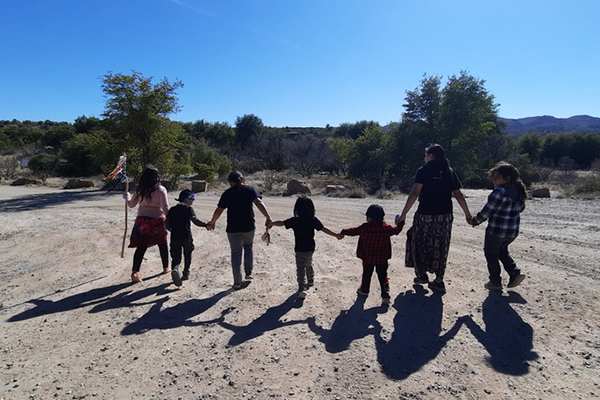
All land is sacred and many places you can explain why, and there are places that must be experienced. Oak Flat is one of those places.
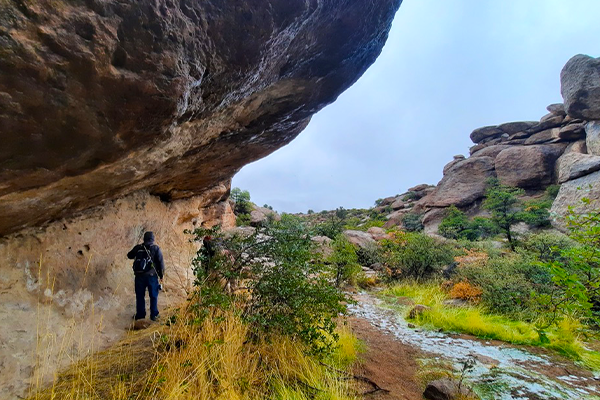
Located in the Tonto National Forest, about 40 miles east of Phoenix, Oak Flat sits at a higher elevation creating an oasis within the harsh desert landscape. While the surrounding Valley is known for its dry heat, Oak Flat carries a different energy. Oak trees grow in abundance, shade stretches across the land, and life gathers there from plants, animals, water, and people. It is a place where the air feels different, where the ground feels alive beneath your feet.
A Protected Place
In 1955, President Dwight D. Eisenhower recognized the significance of Oak Flat and placed it off-limits to mining through Public Land Order 1229. The decision acknowledged both the ecological value of the land and its cultural importance. Oak Flat was protected because it mattered: as a living landscape, as a place of gathering, and as part of a larger natural system that sustains life in an otherwise arid region.
For decades, that protection was upheld despite failed attempts to push mining legislation through Congress, the land was ultimately handed over through a “midnight rider.”
The Midnight Rider
In 2014, Senator John McCain inserted the Southeast Arizona Land Exchange, just hours before the vote, into the National Defense Authorization Act, which is a must-pass military spending bill. This overstepped public debate and scrutiny, clearing the way for a land swap that would transfer over 2,400 acres of Oak Flat to Resolution Copper, a company backed by global mining corporations; and a history of destroying sacred land.
What had been protected for nearly 60 years was suddenly opened to destruction, and without the full consent of the people most connected to the land.
What Are We Really Risking
Ecologically, Oak Flat is not just another piece of land; it is a rare and vital environment.
In a region defined by extreme heat and water scarcity, Oak Flat functions as a refuge. Its elevation, vegetation, and water systems support biodiversity that cannot simply be relocated or replaced. Oak trees, wildlife, medicinal plants, and interconnected ecosystems all depend on this place as it exists now.
The proposed mining method, known as block caving, would destroy that system.
The land above the mine would collapse, creating a crater nearly two miles wide and over 1,000 feet deep.
This would not just alter the landscape, it would erase it.
Water, Waste, and What We Lose
The impacts go far beyond the visible.
Mining at Oak Flat would require massive amounts of water in an already water-stressed region. It also risks contaminating groundwater supplies that surrounding ecosystems and communities rely on.
Additionally, the process would generate enormous quantities of mine waste, also known as tailings, that can remain toxic for generations. These waste materials are typically stored in large containment areas, where they pose long-term risks of leakage, contamination, and environmental degradation.
In a world where planned obsolescence has become the norm, we are conditioned to accept constant consumption as necessary. Capitalism depends on our continued need to buy, replace, and discard. But this is something we can unlearn.
We must begin demanding technology that is built to last, not designed to fail. We must move away from cheaply made goods that end up in landfills, even though they are made from the very same minerals we continue to extract from the earth.
Instead of destroying pristine places like Oak Flat, we should be turning our attention to what already exists. Our landfills are filled with discarded phones, toys, and charging cables, all containing copper and other valuable materials. Rather than mining new land, we should be “mining” what we have already taken.
At the same time, mining companies must be held accountable for the destruction they have already caused, often without repair or restoration. Entire landscapes have been damaged, and in many places, Indigenous people can no longer visit, access, or uphold their relationships with the land.
We must recognize that some minerals are meant to remain in the ground. The earth is not replaceable, and our current understanding as humans cannot fully grasp the complexity and necessity of the systems that sustain life. When we remove resources without regard, we disrupt balances that are essential to our survival.
This is not about rejecting technology. It is about being intentional with what we already have. It is about re-evaluating our relationship with material goods, shifting from consumption to care, and choosing responsibility over convenience.
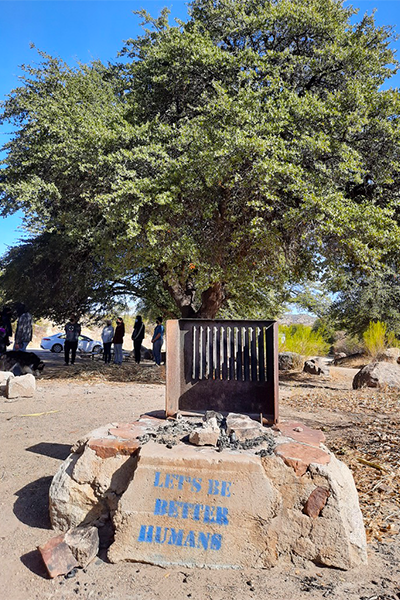
We must protect Oak Flat at all costs.